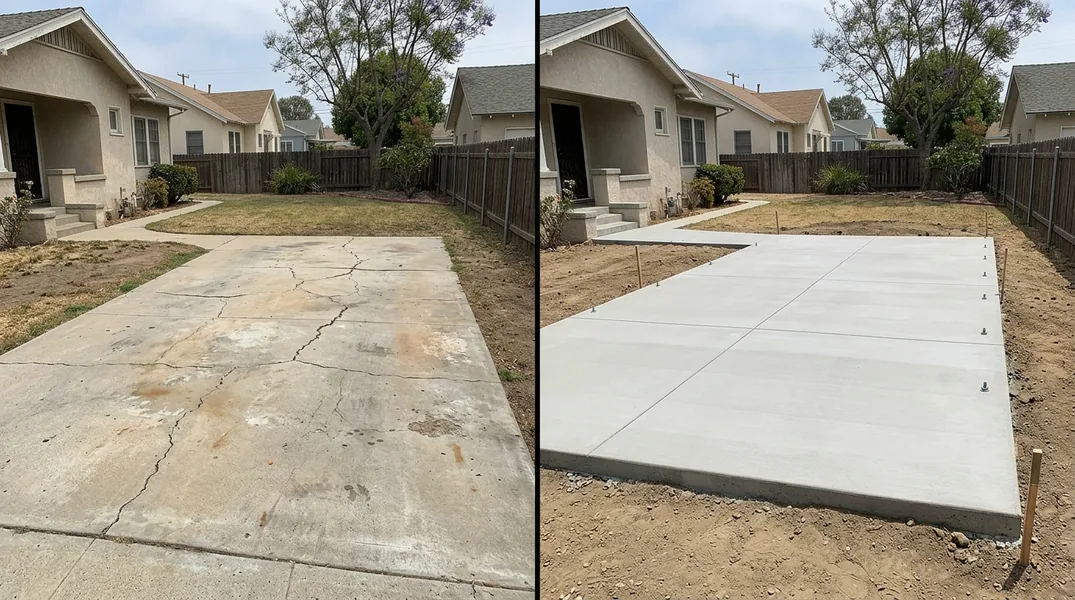
Understanding ADU and Addition Slabs in Long Beach
Adding an accessory dwelling unit (ADU) or a home addition is an exciting way to increase your property's value and living space. However, the foundation is everything, and that foundation starts with a properly installed concrete slab. Whether you're planning a new Long Beach ADU or expanding your existing home, understanding the concrete slab requirements is essential before you break ground.
A concrete slab serves as the structural base for your new construction. Unlike a simple Concrete Driveways project, an ADU or addition slab must meet strict building codes and withstand the weight of a structure for decades. The difference between a residential driveway and a foundation slab lies in load-bearing capacity, depth, reinforcement, and soil preparation. Getting this right from the start prevents costly repairs, structural issues, and potential safety hazards down the road.
Permits and Inspections: The Critical First Steps
Before pouring a single cubic yard of concrete for your ADU or addition, you'll need to navigate the permitting process with the City of Long Beach. This isn't just a bureaucratic hurdle; it's a critical safeguard that ensures your project meets local building codes and zoning requirements. The city requires detailed plans, soil reports, and engineering documentation before approval. Skipping this step or attempting to build without permits can result in fines, forced removal of the structure, and serious complications when selling your home.
New slab inspection is a non-negotiable part of the process. After the concrete is poured but before it fully cures, a city inspector will verify that the slab meets all specifications. They'll check the thickness, reinforcement placement, slope for drainage, and soil preparation beneath the surface. This inspection protects you by ensuring the foundation is built to code and capable of supporting your addition or ADU. Many homeowners underestimate how important this step is, but a failed inspection can delay your project by weeks and require expensive corrections.
Soil Preparation and Site Assessment
The ground beneath your new slab is just as important as the concrete itself. Long Beach properties vary significantly in soil composition, drainage patterns, and compaction levels. Before any concrete is poured, a professional assessment must determine whether the soil can properly support your structure. Poor soil preparation is one of the leading causes of slab failure, including cracking, settling, and water damage.
Your contractor will need to excavate to the proper depth, remove unsuitable materials, and compact the soil to specification. In Long Beach, where coastal conditions and varying soil types are common, this step requires expertise and attention to detail. A gravel base layer is typically installed and compacted to create a stable foundation. Proper drainage must also be considered to prevent water from pooling beneath the slab, which can weaken the concrete and create long-term problems. This foundational work determines whether your ADU slab will remain stable and crack-free for the next 50 years.
Reinforcement, Thickness, and Concrete Specifications
Not all concrete is created equal, and not all slabs are reinforced the same way. ADU and addition slabs typically require thicker concrete than a typical driveway, usually ranging from 4 to 6 inches depending on local codes and the structure's weight. The concrete mix design must be specified to handle the loads it will bear, which is very different from decorative applications like Concrete Patios.
Reinforcement comes in two primary forms: rebar (steel reinforcing bars) and wire mesh. Rebar is strategically placed in a grid pattern to handle tensile stresses and prevent large cracks. The size, spacing, and placement of rebar are determined by engineering calculations based on your structure's design. Wire mesh provides secondary reinforcement for smaller cracks. Your concrete must also meet strength specifications, typically 3,000 to 4,000 PSI (pounds per square inch), which is higher than many residential concrete applications. The concrete supplier and contractor must work together to ensure the mix is correct, delivered at the right time, and placed properly to avoid voids or weak spots.
ADU Slab Foundation Long Beach: What to Budget
Understanding the financial investment required for an ADU or addition slab helps you plan your project realistically. The cost depends on several factors: slab size, site conditions, soil preparation needs, reinforcement requirements, and local labor rates. In Long Beach, you can expect to pay between $6 and $12 per square foot for a properly engineered and inspected foundation slab, though this can vary based on complexity. A 1,000-square-foot ADU slab might range from $6,000 to $12,000 or more, depending on site challenges.
Additional costs to consider include site preparation, grading, drainage systems, and engineering reports. If your property has poor soil conditions or unusual topography, costs will increase. Don't try to cut corners on foundation work to save money elsewhere in your project. A cheap slab today becomes an expensive problem tomorrow. For an accurate pricing estimate tailored to your specific property and project, reach out to Long Beach Concrete at (562) 568-7845 or request a free estimate to discuss your ADU or addition plans.
Choosing the Right Contractor for Your Foundation Project
Your concrete contractor's experience with ADU and addition slabs is critical. This isn't the same as hiring someone to pour a simple driveway. You need a contractor who understands local building codes, has experience with foundation work, and knows how to coordinate with city inspectors. A qualified contractor will manage the entire process, from site assessment and permit coordination to concrete placement and inspection scheduling.
Long Beach Concrete has years of experience working on foundation slabs for additions and ADUs throughout the region. We understand the unique challenges of Long Beach properties and local code requirements. Before hiring any contractor, verify their licensing, insurance, and references for similar projects. Ask about their experience with new slab inspections and their relationship with local building departments. The right contractor becomes your partner in ensuring your project is built right the first time. Contact us today at (562) 568-7845 to discuss your ADU or addition slab project and get started on the right foundation.
Looking for a professional concrete contractor in Long Beach? Long Beach Concrete responds fast for all your concrete needs.
Get a Free QuoteOur services: Concrete Driveways · Concrete Patios · Stamped & Decorative Concrete