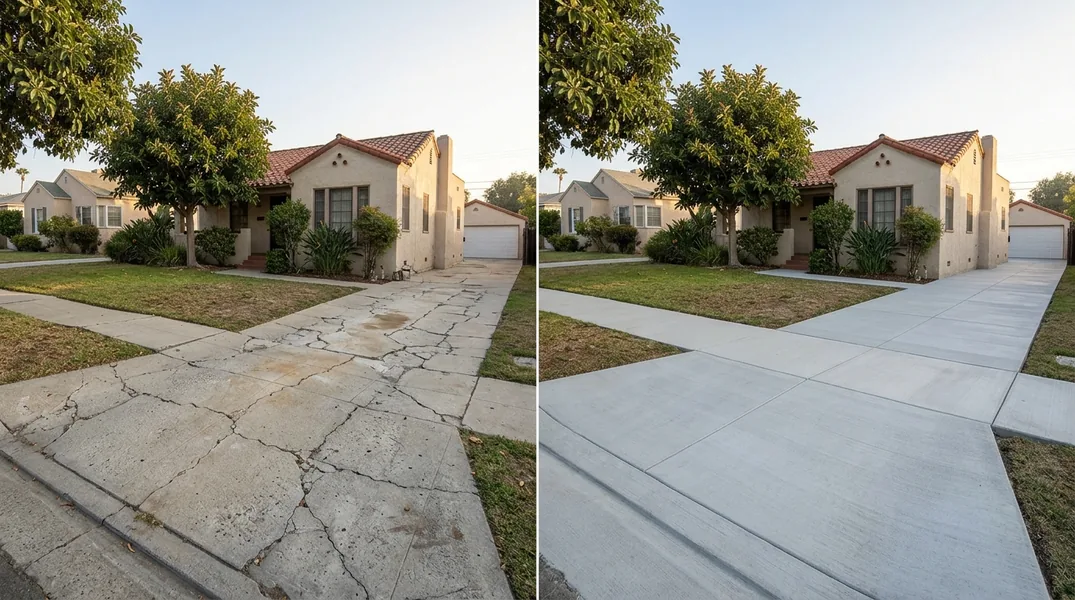
Understanding Concrete Pouring Season in Long Beach
If you're planning a Concrete Driveways project in Long Beach, timing is everything. While Southern California's mild climate makes year-round concrete work possible, certain seasons offer significantly better conditions for pouring, curing, and achieving a finished product that will last for decades. Understanding when to pour concrete in California requires knowledge of temperature fluctuations, humidity levels, and the unique weather patterns that affect our region.
The concrete curing process is sensitive to environmental conditions. Concrete needs adequate moisture and moderate temperatures to develop proper strength and durability. Pour your concrete during the wrong season, and you risk premature cracking, weak bonds, surface scaling, and a shortened lifespan for your investment. Conversely, choosing the optimal time ensures your new driveway, patio, or decorative surface cures evenly and reaches its maximum potential strength within the first 28 days.
Spring: The Ideal Window for Concrete Work
Spring, particularly March through May, represents the sweet spot for concrete pouring in Long Beach. During these months, daytime temperatures typically range from 65 to 75 degrees Fahrenheit, which is ideal for concrete hydration and curing. The air isn't too hot, which means the concrete won't dry too quickly and develop surface cracks. At the same time, temperatures are warm enough to support proper chemical reactions within the concrete matrix that give it strength.
Spring also brings moderate humidity levels that support the curing process without creating excessive moisture that could weaken the concrete. If you're planning Concrete Patios or other projects, spring allows contractors to work efficiently without battling extreme heat or cold. The longer daylight hours also mean projects can progress smoothly throughout the day, and weather forecasts are generally more predictable than other seasons, reducing the risk of unexpected rain or temperature swings that could compromise your fresh pour.
Fall: Your Second Best Option for Concrete Curing
Fall, spanning September through November, offers conditions nearly as favorable as spring for concrete work. Temperatures cool gradually from summer highs into the comfortable 60s and 70s, creating stable curing conditions. Many homeowners overlook fall as a concrete pouring season, but it's an excellent time to schedule projects because contractors often have more availability than they do in the busy spring months. This can mean faster scheduling and potentially better pricing for your project.
One advantage of fall pouring is that you avoid the intense summer heat that can cause rapid evaporation and surface defects. The gradual cooling trend also allows concrete to cure more uniformly. If you're considering Stamped & Decorative Concrete work, fall provides excellent conditions for precise finishing and achieving the aesthetic details that make decorative concrete shine. Just be mindful of approaching winter rains, and discuss timing with your contractor to ensure proper curing time before the rainy season peaks.
Concrete Curing and Santa Ana Winds: A Long Beach Challenge
One weather phenomenon unique to Southern California that directly impacts concrete curing is the Santa Ana winds. These hot, dry winds typically occur from October through April, but most intensely in late fall and early winter. When Santa Ana winds blow across Long Beach, they bring extremely low humidity and rapid temperature swings that can wreak havoc on freshly poured concrete. The intense drying effect causes surface moisture to evaporate too quickly, leading to plastic shrinkage cracks that are difficult and expensive to repair.
If you're pouring concrete during Santa Ana wind season, your contractor must take extra precautions. These include covering the concrete with plastic sheeting, using curing compounds, misting the surface with water, and sometimes adjusting mix designs to account for rapid evaporation. The good news is that experienced Long Beach concrete contractors understand these challenges intimately and have developed proven strategies to protect your investment. When you work with a local professional who understands concrete curing during Santa Ana winds, you're paying for expertise that prevents costly mistakes. If Santa Ana winds are forecast during your project window, discuss mitigation strategies with your contractor before pouring begins.
Why Summer and Winter Are Less Ideal for Concrete Pouring
Summer presents significant challenges for concrete work in Southern California. While Long Beach doesn't experience the extreme heat of inland areas, summer temperatures still regularly exceed 80 degrees and often reach the low 90s. This heat accelerates the evaporation of water from freshly poured concrete, causing it to set too quickly and unevenly. Rapid setting prevents proper curing and creates internal stress that manifests as cracks, weak spots, and reduced durability. Additionally, the temperature differential between the concrete surface and interior can cause differential curing rates, compromising the structural integrity of your driveway or patio.
Winter, while mild in Long Beach compared to other parts of the country, still presents obstacles. Concrete curing requires temperatures above 50 degrees Fahrenheit to proceed at an acceptable rate. While we rarely experience freezing temperatures in Long Beach, winter rains are common from December through February. Excessive moisture during the critical curing period can trap water in the concrete, weakening it and creating long-term durability issues. Additionally, shorter daylight hours mean less time for contractors to work, and the unpredictability of winter weather makes scheduling difficult. If you must pour concrete in winter, expect your project to take longer and cost more due to the protective measures required.
Planning Your Concrete Project: When to Contact a Professional
The best time to think about concrete pouring season is well before you actually need the work done. If you're considering Concrete Repair & Resurfacing or a new installation, start planning at least two to three months in advance. This gives you time to get a free estimate from Long Beach Concrete, discuss seasonal considerations specific to your project, and schedule work during optimal conditions. Our team at (562) 568-7845 can help you understand how seasonal factors affect your specific project and recommend the best timing for maximum durability and aesthetic results.
When you reach out to Long Beach Concrete, be prepared to discuss your project timeline, budget, and any specific concerns about weather or curing conditions. Our experienced contractors will help you navigate seasonal considerations and ensure your concrete receives the care it needs during every stage of the process. Whether you're in Long Beach, Lakewood, Signal Hill, or Seal Beach, we're ready to help you make the right decision for your property.
Looking for a professional concrete contractor in Long Beach? Long Beach Concrete responds fast for all your concrete needs.
Get a Free QuoteOur services: Concrete Driveways · Concrete Patios · Stamped & Decorative Concrete